Yesterday’s post covered the basics of my world with ADHD and a learning disability. As I wrote about briefly, a big theme in the ADHD/LD sphere is that of executive functioning. I know, I know, it conjures up images of fancy businesspeople, specifically at a cocktail function. (No? Just me?)

So, what is executive functioning? Why does it matter? I’ll let the experts—and a sixth-grader named Josh—handle that in infographic form, made by the awesome folks at the National Centre for Learning Disabilities:

[View infographic here since the link broke]

(Source)

Nope, I’m not a sixth grader, but I struggle with most of these areas.

Organization: I was the person who never had a pencil or pen in school (fortunately, my friends—especially my friend Sam—were excellent with dealing with this annoying trait of mine…). Even in university, I usually had to get lucky on this one! I miss buses because I can’t find my keys, or I miscalculate how long it will take me to get ready before getting to the bus. A later pane has Josh unable to remember the correct place settings when setting the table at dinner—at twenty-three, my mom is still telling me to switch the position of the forks and knives more often than not! In a later frame yet, Josh forgets to put his finished homework in his backpack—yup, just because it’s important, doesn’t mean it’s making it where it needs to go: been there.

Working Memory: This is why it’s important for me to write everything down somehow. Whether it’s the post-it notes of chores, or making notes of what I’m reading… say it with me: “If it stays in your head, it gets lost.” (…Thanks for that mantra, Jay!). Sometimes, let’s be honest here—most of the time, I just simply didn’t do a lot of readings in university. Others, I would spend a ton of time doing the reading, and it wasn’t much different than when I actually did it. “I don’t know… I wasn’t thinking of those words when I read last night. I’m so overwhelmed.” is how I felt—and, hoping the instructor didn’t call me out for an answer: yes, I raised my hand when you asked who did the reading, no I didn’t lie—I did it, but, I can’t get the information you want in cohesive thoughts quickly enough to not look dumb or like I didn’t do the reading. “His heart sinks thinking about all the steps answering this question takes.

Self-Monitoring/Impulse Control: In the big picture, I appear okay with impulse control. Sometimes I catch myself talking way too much and apologize. But let’s go back to prior to the infographic when I noted that I took a 30 minute deviation looking for t-shirts. That’s because I impulsively read an e-mail instead of selectively ignoring it until I was done this task, and then allowed it to take priority over writing. Now, once again—how much is me, how much is ADHD? How much is that I desired to do that versus this, and how much of that was pure choice vs. choice with a side of impulsivity driven by ADHD? For instance, if I want to change my behaviour on a bigger scale (make it habit, perhaps), will it take me more sustained effort to change that behaviour versus someone with a “typical” balance of neurotransmitters (aka, a non-ADHDer!); how much of the success of this desire to change is derived of ADHD, and how much, more simply, of pure personality? Am I less likely to, for instance, adhere to an exercise routine because of my ADHD, or purely because of personality, than someone without ADHD? I don’t have answers for that, but for more on self-regulation theory and its applications, check out this article.

Cognitive Flexibility(/Working Memory): Here’s a parallel: Josh in the infographic struggles with keeping his thoughts organized in a soccer game… and kicks the ball into the wrong goal. This is 100% me. Interestingly, I coach now, and keeping the rules to the game straight is still very difficult for me—as is quickly revamping a plan without having somebody to talk it through with. This also translates into simply making/keeping plans and obligations. The combo of cognitive flexibility and working memory are probably also the difference between finishing a project early (be it a paper, volunteer research, or editing a video) because I remember it at other times and not simply the days before a due date! (I could be interpreting this wrong, but, that’s my take on it.)

Emotional Control: Little things -> big reaction? Sometimes. I still struggle to express anger or frustration in any other way than bursting into tears—or being on the verge of doing so. And, when so many basic things can be the source of my frustration, this is just another thing that is very difficult to deal with sometimes, because sometimes the small reminders feel like personal attacks—even if they aren’t at all, it’s just that when I forget my keys for the thousandth time or don’t have bus fare, I’m already frustrated enough at myself—so any outside digs are simply more than I need in a given moment.

Task Initiation: Going hand-in-hand with organization, switching from one task to another or prioritizing, can be extremely difficult. Why am I writing a blog post instead when I have a task I was supposed to have submitted yesterday is incomplete? Why did I not do any preparation for coaching Goalball on Sunday until the night before? Because it is difficult for me to initiate tasks that require a lot of mental organization or “figuring out” beforehand—even if they are things I really want to do. Because “I don’t even know where to start.” is 100% accurate. Which, of course, goes along with the next point…

Planning + Setting Priorities: I remember one occasion specifically where I started writing the bulk of my final paper for Sport in the Ancient World two days before it was due. I went to bed at 6:45 AM. I’d done the research, or at least a lot of it, but the writing of the paper itself went on the back-burner. I’m legitimately surprised that I had as few all-nighters as I did in university. Not being able to figure out the structure of a paper isn’t a mystery to me either—a combination of poor planning and task initiation lead me to having no idea how to write a midterm paper for Sport Ethics a couple years ago—I couldn’t figure out how to structure it, and it was due the next day. Had I planned better, I’d have been able to get help from the prof; instead, I dropped the course—a common thread in my university experience, and probably much to do with difficulty in terms of cognitive flexibility and planning/prioritization!  Refer also to task initiation.

Those are just a few ways executive functioning issues affect my life. As a young adult who is supposed to be gaining more and more responsibility, this is why my ADHD/LD diagnosis is key: in understanding myself and how I interact with my world, I am able to be more patient and self-accepting when I do mess up. It will happen, so best to prepare for it—and accept it!—through understanding the impacts of my quirky brain on my interaction with the world.

…The problem, of course, is that I think I’ve been too self-accepting: as I alluded to yesterday, my room is still a disaster :].
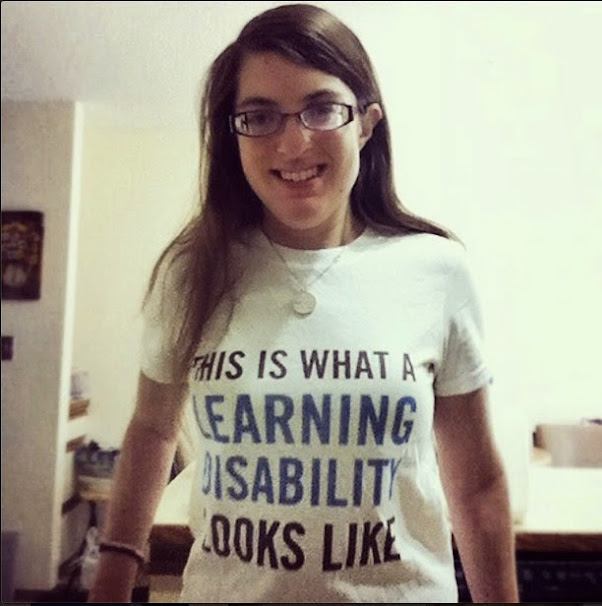
I wake up as After the Fire by Andrew McMahon fades in on my iPhone on the edge of my bed. Like most, I assume, I tap the back of my phone and the music fades out—the SleepCycle version of snooze. A short time later, the process repeats but instead of tapping snooze, I sit up, unplug my phone, and start getting ready for the day. I take my morning dose of Concerta—occasionally, however, checking the water glass beside the sink to indicate whether or not that it was indeed this morning that I took the Concerta! Sometimes the mundane tasks blend into one another, and it’s the little tricks that help me figure out what I’ve done when.

I step over something or another, and attempt to find clothes within my room. Yes, I’ll admit, it’s a disaster in here. There are a pile of books, papers and textbooks beside my bookshelf, many residual from April when i finished exams, or yes, dare I say it, February when I was working on a project for the Asthma Society of Canada and was reconsulting many of my books from school. Yet, I graduated university in June, and those piles remain. So do the ones of clothes on the floor, a byproduct of my normal cluttered life, and the fact that I spent every weekend for nearly six months packing up a bag and heading out of the city. Others of the books on the floor are notebooks, journals, and yes, my kickass yet not-utilized Moleskine Lego planner. Lesson learned: not even the kickass Lego planner can take the place of Google Calendar in my heart—or brain. I find some clothes to throw on—well, eventually; sometimes that doesn’t happen until 2:30. I graduated university in June, and resigned from my job at the beginning of October, so at present I’m hunting for jobs, doing some quantified-self-ing, and trying to make productive use of my time. Writing, video editing, coaching… A myriad of tasks and habits I’m trying to build or un-break stack up in HabitRPG.

Routine, especially building it, is probably one of those things that’s harder to work at with ADHD. It’s hard for everybody, but because I am so dependent on reminders (such as Google Calendar/iCal), it is difficult when these reminders become too repetitive and, thus, no longer intrusive enough—like I said, problem for everybody, but potentially disastrous for me in terms of meeting obligations and being accountable—another thing I try to stay conscious of. I have excellent intentions of organization: sometimes I am able to stick to them, especially with the right technology. Others, the act of organizing the organization is simply too much to organize—or, I get distracted in some subset of organization and then never accomplish the initial task! (This, is what happened in my bedroom, really. I went in to start cleaning and organizing. I decided I needed a file cabinet to keep all the paper in. I needed, then, to acquire the file cabinet. Oh, file cabinets are expensive, what about some plastic drawers? Oh, those all sort of don’t meet my needs. Hey, guess what? This was May—it’s October now. All that paper is still on the floor right where it was! (I still don’t have a file cabinet or any such organizational implement—but yes… I am trying.)

Right now, the first thing I do (and last thing I do, and maybe 85% of what I do in between…) is sit down at my laptop. Usually, my mom has affixed some sort of post-it note to it with a task or two or seven for me to accomplish. Today is “wash + dry dishes + sweep floor”. (But I swept the floor yesterday with no prompting!) Usually, with these notes, the job will get done (even though, to my dismay, the dishwasher is still not working—usually the notes say “empty dishwasher and reload”—dishwashers are probably an independent ADHDer’s best friend, except I live with my parents), because as I tell her and as my friend Jay said, “Write it down; if it stays in your head it gets lost.” That’s why not very much stays in my head very long—it gets lost super quickly in there. I struggle significantly with memory related tasks: my visual memory sucks, and my auditory memory isn’t a ton better—so, I work on the deficits of both of these by combining them to get stuff down. That’s why lists are so important… well, if I don’t lose them or can figure out how to implement them!

Back to the Concerta for a minute, the Concerta does help in that regard—it keeps me focused a lot longer on a task, and things tend to get lost in my brain less easily (things getting lost in my brain include the result of what happens when my attention wanders from a task, and I move onto another one without finishing the first one. Like starting a blog post, and then finding myself an hour later trying to work on a website… with only two and a half sentences in the blog post window. Actually, case in point on the Concerta right now? I’ve been writing this for 28 minutes now and the only thing I’ve glanced at is my phone once to reply to a text message, and the post it note of chores—which are already done. It helps, like it does for most ADHDers, that I want to be writing this right now—but even that without the Concerta, was a big issue! Medication isn’t for everybody, but to me, I’m pretty sure it was the difference between graduating university and possibly dropping out. So yes, I am distracted by bright coloured things, but so long as those bright coloured things are like my post-it note of things needing to be done, well, that’s okay. The Post-It notes are necessary because, yes, if you just tell me something to do, it’ll be forgotten. If I have that visual cue that can keep reappearing, then I’m much more likely to actually follow-through with the task.

I contemplate writing things multiple times a day. Sometimes it happens and I open up the Evernote notebook of a project I’m working on, or throw a post onto Quantify This. Sometimes though, it doesn’t. I’ll intend to go write a post on the other blog, but then spend five hours trying to install a Windows VM onto my Mac, or learn how to download all my Fitbit data into a Google spreadsheet, and then get that spreadsheet to autopopulate into Excel. Except by then it’s midnight and nope, no blog post. This is why I’m not a good daily blogger! ADHD, I think, lends itself more to this infinite curiosity, except like other infinitely curious people, ADHDers tend to have faulty brakes—we either stop too frequently, or we get into something and can’t stop. The latter, known as hyperfocus, is kind of a compensatory mechanism: we bounce around so quickly, that sometimes if we get really engaged in something or have pressure to complete a task [ie. a deadline tomorrow] we simply power through and may barely look up from a task for hours—so, right now, I’m probably a tad hyperfocused on this post because the pressure that October is ADHD and LD awareness month and it’s the 21st of October and I forgot until two days ago is enough pressure for me to get this one cranked out—that, and enough people on Facebook expressed interest in my sharing of this article last night, that I figure sharing more of my story was important to do right now. (Run-on-sentence.)

The ADHD brain is kind of like a run-on sentence in itself—I’ve said before, “I don’t stop, only pause”—there are only commas in here, no periods. I may not be physically moving, but my brain is going full speed until I eventually go to bed—something that I also have to prompt myself to do: yes, eventually I feel tired, but I rarely feel it until I make the conscious decision to go to bed—sometimes annoying, and the reason that 11 PM prompts a (now frequently ignored) reminder to “wind down” on my iPhone.  [Okay, stream of consciousness: There we go. I remembered to follow up on an e-mail prior to sitting down to start this, and that reply to the e-mail lead to searching for t-shirts… Yes, can’t make this stuff up! So, there was a 30+ minute gap in there… Typical.] The ignoring of the reminder at present, however, might be because I no longer have engagements requiring being awake at 6:45 AM.  

Which begs the question:

So how much of this is me, and how much is ADHD/LD?

Well, I’m not sure I can really separate myself from them—how my brain functions is as much me as my personality or my affinity for Cheetos. It’s just the way I am, and I’m okay with that.

I’ve written about my LD here before, because it’s kind of nonspecific. A lot of it has to do with my visual memory: I can’t read an analog clock (at least, I can’t without using my fingers to help me determine what span of time the minute hand is pointing to, which is essentially equal to being unable to read a clock), I struggle with reading comprehension when attacking large works, because it’s hugely dependent on visual and visual working memory, areas in which I am deficient, despite my reading ability being above average. I may best fall into the category of Nonverbal Learning Disability, but have not been diagnosed as such—not that it makes a huge difference. At this point, my LD comes up in ways that could be associated with my ADHD, and ways that don’t presently affect me in the day-to-day now that I’m not in school—or, ways that are much a part of me and I don’t notice as much more than quirks.

ADHD and learning disabilities come in many flavours. I have primarily inattentive ADHD—making things like sustained focus (especially for the uninteresting), organization/remembering where I put stuff, initiating/changing tasks, and coming through on commitments more challenging for me. These things are because of the effects of neurotransmitters affected in ADHD on executive functioning… but, that’s a topic for tomorrow. [It’s already written, but, it makes more sense to split into two posts at this length! :)]

Questions about learning disabilities or ADHD? Leave them below!

1002215_10153231634335375_1208441892_n.jpg

Last year, my university changed their graduation requirements for the kinesiology program. This means, since I started the program in 2010 [or something of that nature, I’ve been there too long], I can choose between the new option or the old one. [Main point: the new one requires only anatomy. The old one requires both anatomy AND physiology].  I met with the department chair last year to discuss swapping some previous credits in teaching/psychology related courses for other related ones, and seeing if I could switch anatomy for physiology–just to see if I maybe could handle that better.

Since May, the whole department has kind of switched things up turning into a faculty, however, so I e-mailed the new associate dean on Thursday last week to follow up–turns out that the department chair was taking my request to the curriculum review committee the next day, but we scheduled a meeting anyways. Within 24 hours of his response, I had received an e-mail from the chair as well as a follow-up from the associate dean […got that?].  Approved: Switching coaching/teaching requirement and swapping the psychology class. Not approved: Anatomy exemption/swap. So, I was rather surprised when the associate dean responded with my question of whether we still needed to meet with “I think we should still meet to discuss how you are going to handle the Human Anatomy requirement.”

So what’s changed between last round and this round? Another F, being assessed for learning problems, and becoming registered with Accessibility Services.  I got his reply and my jaw just about dropped.  I walked into his office this morning, and the first thing he said to me was: “Kerri my dear–let’s talk. The department is willing to work with you to get you through anatomy and out of here.”

I was choked up the whole appointment.  The results of that meeting? I couldn’t believe it. At all.

The kinesiology department is not just willing to work with me, they are going beyond what I had ever imagined–much like the accessibility department did. I am floored.

The department is going to pay for a mentor/tutor to work with me. I was prepared to pay for a tutor [and I probably still will for some extra hours]. The number of hours they will cover has yet to be determined, but this is huge. On that note, their hope is that this person is able to work with me in lab . . . in a separate lab section to minimize distraction and ensure I am actually understanding things. This will also allow me to work a bit slower at quizzes in lab and give me a bit more time for the model to sink into my brain.

Second, we discussed testing, specifically in the lab. My accommodations through Accessibility Services already allow me lengthened time for tests [thanks second percentile processing speed!]. We have yet to figure out how we are going to make this work, but it is just awesome knowing that they will make it work. [He offered, also, to exempt me from quizzes and weight my final exams higher, but I decided that it is good to get that kind of progress report on a weekly basis.]

Third–yes, third, and definitely the most interesting–is that the associate dean himself is all over this. He wants me to meet him every few weeks for an hour or two so we can go over what we’ve been working on class–through this, he can figure out the best ways to help me retain what I’m doing in the course, and figure out what I need to work on and help me actually understand it–not just memorize it–and check in regularly about how things are going.

Seriously? Speechless. Honestly, I was told awesome things about this guy. And he not only met my expectations of his awesomeness–he went so far beyond them.

I hope that, with all of the above, I can go far beyond my own expectations, too.

Seven-plus months ago, I started what was an arduous journey. I’d known in myself that something was off for a long time with how I performed educationally. Until university, I didn’t have any exceptional struggles [unless we count that I could never master the multiplication tables, or that even being tutored through grade 9 math I still came out of there with a C]. Then university came. I’m sure I’ve probably dropped nearly as many classes as I’ve taken–I couldn’t get through the readings for the most part [and, let’s be honest, that C in intro psych could have probably been at least a B had I read any of the textbook!]. When anatomy came, I shrugged off the first F–especially after I found out how many people in med school fail anatomy. The second one? I’d put so many hours in. I’d spent countless hours with a tutor, I’d made a stack of flash cards, I’d coloured the colouring book, I wasn’t leaving labs early. I’d failed or near-failed tons of tests, yet by balancing them with papers, I was mostly rolling out C’s and B’s, with a few A’s thrown in in the classes that really gelled with my learning style, my interests, my quirks, and my academic gifts.

When I went through the educational assessment process last Winter, of course there’s all that associated doubt: I’ve gotten this far in school, why am I bothering with this now? They probably won’t even find anything helpful. But, the what-if’s kept me there.  While they were unable to diagnose or exclude ADHD in me, they did nail down a bunch of things: a bunch of things that had lead me to question my abilities at just about everything.

For me, a lot of it lies in my processing speed and working memory. I can’t say I believe in “normal” too much, but in psychology, everything is about deviations from the norm. My processing speed is definitely one of those–it’s only higher than 2% of females in my age group. It also means I’m probably more inattentive and distractible. My working memory deficits makes it more difficult for me to manipulate information in my head. And you know what? That’s nothing that I didn’t already know. It just gave me more knowledge about myself and how to work with what I have.

In the last several years though, I’ve worked with a lot of kids. I’ve worked with a lot of kids whose parents knew something was different and acted on it to help their kids be the best they can be. And I’ve known some kids whose parents chose the other route.  Are their children struggling more than they need to? Are they being denied access to proper supports, both socially and educationally? Is the fear of a diagnosis hindering the child when having more knowledge could be helping?

Diagnosis: it’s not a label, it’s a bridge. Learning about how I learn, about how I have what might be called a learning disability? It’s made all of my struggles make so much more sense. It didn’t start anything new, it just underscored what we know I’ve always excelled in or struggled with. It’s help me maximize on the things I’m good at. It let me know that I’ve struggled for legitimate reasons with a lot of things . . . and I’m not dumb and it’s not my fault.

I have new plans. I have support at school. I have resources that can help me with my outside-of-school life–because that requires a lot of organization that I don’t rock with, too. I have new determination that I can do this.

But I can only imagine how much more settled I would be, how much more successful I’d have been at certain things, if I’d had this knowledge earlier.

My perspective, and this goes especially to parents: if you suspect you or your child may be experiencing specific struggles involving learning, attention, development or socialization. . . do something. Diagnosis of a learning disability, ADHD or a developmental problem is NOT a bad thing. It doesn’t change who you are, it doesn’t change who your child is. It just helps in acquiring the right resources to maximize success, not only academically, but in creating friendships, cultivating creativity, and reducing stress or anxiety.

It doesn’t define me–it helps explain me.

3oqdmi.jpg

Seriously . . . have to find memes where I can, right?

(source)

I have been almost overwhelmed by the positive words I have gotten from people following the results of my assessment.  I had a few comments that I had to shrug off because, like anything, sometimes people really do not understand–that said, I can’t claim to understand everything either.  However, now that the results and initial meetings are out of the way, it’s about taking the action to modify the process.

This week has been all about seeing that being put into motion. And feeling thankful, grateful for the people around me who are on all sides of making that happen, and helping me to make this transition successful. In reality, it is a continuation of what is going on outside of me, but also a fresh start of what’s going on inside of me. It is knowing that, on the road ahead, that I will have the right things in place. It’s knowing that maybe I might actually have a graduation date in reach. It’s knowing that I can do this, even if I have to do it a bit differently than I have been.

Yesterday I wrote my first exam with accommodations. I used a few minutes of my extra time allowance, and the private room was louder than I thought it would be (so, I will probably take them up on the earplug offer next time. Because that is an available service apparently). I was asked if I wanted a clock or time-prompts during the test (they said it was okay to look at my Fitbit, so I declined). Bonus perks: I got a soft spinny chair and a foot rest. I am not joking people. There were also pencils and an eraser provided on my desk which was unexpected, and I forgot my ID in my jacket pocket which was not with me, and somebody on staff at Accessibility Services [AS] just vouched for me.  (Also everything is really hush and confidential–considering my entire life is on the internet I am not super concerned about this, but it cracked me up when she whispered “What’s your name again?” and I replied at a normal volume.  On the exam-room booking schedule, I was only in there by my initials).  After I finished, I went and hung out outside the room my class was writing in (as they were being held captive for a full class period) to snag my friends Courtney and Rachael after the test to see how it went, and my instructor came and asked how things went.  The test was harder than we thought it would be, and we all didn’t really study the right stuff, but really, it’s Intro to University. It’s fine!

Today I’ve seen things unfolding.

After my instructor left the room in Scientific Principles of Fitness and Conditioning this morning so we could fill out course evaluations, I ran into her as I was leaving the building. “You’re Kerri, right?” [Well, something had to do it. My long standing ability of being another non-descript student to a lot of instructors is coming to an end!] “I was just talking to Accessibility Services about getting the course notes document to you–I’ll send you an e-mail later today.” Sure enough, a few hours later I got a couple of Word documents of the course notes popped into my inbox, cc’ed to my Accessibility Advisor, with an apology for things taking so long. After thanking her (and my advisor who is so fabulous), my instructor then asked me if she needed to provide AS with the final exam for me, following which we had some fun back-and-forth e-mails, which was totally unexpected but, once again, very appreciated.

I also received an e-mail about textbooks for next term from AS, and navigating that audio-conversion process again, and got in touch with my prof for my spring Classics course to see if I could get a syllabus [I need to provide AS with one due to the audio-book thing]. I am only mildly looking forward to this course [see also: lots of reading], but I am now really looking forward to meeting the prof, as she started her e-mail back to me with “Thank you for your beautifully written e-mail.” which totally made me smile. Cracking my shell also involves, of course, self-identifying (I’m getting an official Letter of Introduction for my instructors in upcoming terms, but an informal e-mail is always a good start, too), and making the choice to meet with my profs early on in the term so that I can gauge how best to approach their class and what that process will look like as it unfolds. (This may be the one important tip I took from intro to university!)

I’ve felt grateful. I’ve felt inexpressible appreciation. For all the people in this unexpected journey.  For people who are not only helping these things fall into place, but actually wanting to ensure things happen effectively. For people who are going beyond what they need to, especially at this point in the term, to help me. For people who maybe I have had second thoughts about . . . who are now not only doing what they are required to . . . but going beyond that and helping to meet me where I’m at.

Staring into the intersection, she thinks that she can fly, and she might.

straw dog, something corporate