On Sunday, I sat a table in Perkins in Minneapolis with my friends Scott and Heather, engaged in the flow of conversation over grilled cheese sandwiches—the usual flow of topics with a few twists: exercise, coaching (in the life-coaching sense!), and diabetes. In the past, I’ve had conversations with my friend Bethany in which mid-sentence in a Starbucks [or elsewhere] she’s kind of stopped and said “Are you getting this?” to which I just nodded and said “Yep, keep going.”

“It’s just so crazy you know all this stuff about diabetes and you don’t even have it!” She replied.

A few years ago, I found myself surrounded within the Diabetes Online Community [or DOC]. And since then, I’ve learned a lot about what life with diabetes—no matter what type—can look like. Because not everybody with type 1 has the experience as another type 1. Not everyone with type 2 has the same experience as somebody else with type 2. And, mixing elements of both T1 and T2 are those with LADA—or type 1.5, and their stories will look extremely variable, too.

As Scott and Heather discussed Nightscout/CGM in the Cloud (how very smart/techy people with diabetes or caring for people with diabetes have managed to connect their Dexcom continuous glucose monitors through smartphones to upload their glucose data to the cloud, and from there, can load data remotely—ie. a parent can watch their child’s blood sugar levels from their desk while the kid is at school, the data can be streamed to a Pebble smartwatch to allow less-conspicuous access to BG levels, or a variety of other possibilities to allow even more of a safety net than CGM currently provides).

(Graphic source: DiabetesMine)

Scott had given me the CGM in the Cloud tour in August (so I arrived at Dana’s DIYPS talk at Medicine-X I was a bit more clued in than I had been previously!), also over grilled cheese, and while I’d heard about the system over Facebook, it was even cooler to see in person as he slid his Dexcom over and handed me his Pebble to see it first-hand. Dexcom has only recently become available in Canada (both standalone and integrated with the Animas Vibe insulin pump), and I shared this with Heather and Scott… along with the slightly amusing fact that I constantly have Animas Vibe ads on the side of my Facebook page because of all of the diabetes talk that goes on within my Facebook feed.

The reason, though, that I have so many friends with diabetes is perhaps because of diabetes, but more because many people with diabetes care about something much larger than their own story: they care about making the story of others better. I joined a Diabetes Social Media Advocacy (#dsma) chat on Twitter one night several years ago (and several more after that) and people were really enthusiastic about my non-diabetic self joining the conversation because I wanted to learn. The DOC has, in turn, become my support. They were the people who were constantly reaching out when I was in the ER for blood transfusions, or are the ones who reach out when I say my asthma is sucking—just as I do when someone tweets an out-of-range blood sugar, or shoot an iMessage off to a friend just to check in when they’re struggling with their diabetes. They are a big, passionate and loving community, and that is because of the individuals that are a part of it: they see the bigger picture, and they want to make the bigger picture BETTER.

In my day to day life, yes, maybe diabetes is just a passing thought when one of my few local friends quickly checks their blood sugar or takes an injection at lunch—but it’s also knowing enough that I can provide a bit of empathy and humour. One day at dinner, a friend tried to check his blood sugar under the table and I just laughed and said “Hey, I know what you’re doing, it doesn’t bother me if you use the table, you know.” If asthma has taught me one thing, it’s that we all try to be stealthy with our disease management sometimes, and often it’s more for the sake of not being asked questions than it is we truly want to hide what we’re doing—later that night, though, the same friend did text me his BG (we were, after all, at Olive Garden :]), and I hope that my openness can be a layer of support for him if he ever wants it.

In living with any chronic disease, it’s about feeling like you have options (even if, maybe, they are pseudo-options because they are necessary): to choose who you talk to—because I don’t have diabetes, on occasion friends with diabetes will message me because I don’t have diabetes but have a very basic understanding of what they’re talking about; to change up your routine; to use different methods of treatment. Using a continuous glucose monitor is one of those options—because while the information can be extremely helpful, it’s also a constant reminder of where you’re at and can lead to data overload. Same with using an insulin pump for those who are insulin dependent: it increases flexibility in some ways versus injecting insulin, but it also means that 24/7 you are tethered to a small machine or have an insulin pod stuck to your body. Which leads to the choice aspect: my friend Bethany (above) has had T1D for over 30 years. The last time we had lunch, she pulled out an insulin pen and I was like “HEY. Since when are you not pumping?!” (She laughed and was like “Wow, it has awhile since we’ve seen each other, hasn’t it?!”)

Where am I going with all of this?

My friends with diabetes have no choice about having diabetes—they make the choice to do their best, to advocate, to change their world and the worlds of others with diabetes though support, technology innovation, and compassion. Diabetes is 24/7, in a far different nature than asthma is: with diabetes, the same hormone that is provided through injections or pumping, insulin, to save a person’s life can also be lethal—diabetes is a constant balancing act. It is psychologically invasive in a different way than my own chronic disease is. None of us have a choice, but we can learn how to best support one another. If I can provide the kind of support that says “Yes, I want you to be healthy. I want to support you as I can, as a person without diabetes—I’m here to accept where you’re at and listen. I want better things to be available. I care.this is what I want.

Read that last sentence over and simply take out the segment that reads “as a person without diabetes”—shouldn’t this be how we all interact with each other? By learning about where someone is at, and accepting them in that moment?

My friends with diabetes can DO THIS. They can manage their diabetes with the tools they have. And because they can DO this, the ins and outs of life with diabetes, I can certainly LEARN this: a few small lessons about their worlds that hopefully make them feel supported in the way we all want to be. Even if at some times that just looks like a non-diabetes conversation for a break, or having some snacks on hand and waiting out low blood sugars with my friends.

Because that’s the most important part: we are here for each other, because we’re friends.

To my friends with diabetes: Thank you for everything you’ve taught me—I owe you all a hug! :]
A few months back, Dia and I began collaborating with the staff at the Asthma Society of Canada [ASC] to build a new resource for patients in the form of educational webinars. As flu season begins to take hold (Flu shot? Check? I hope so!) we decided that the flu and how that whole situation can be far more complicated with asthma, and other chronic diseases, was a good topic for our first go at a webinar!

Prepare for flu season by joining NAPA and ASC’s webinar session on Influenza and Asthma! Thursday November 18th at 12:00pm EST.
Register today at 

Dr. Shelly McNeil (Dalhousie) is lined up among the presenters, and you can learn more—and register!—at the link above. I hope you’ll join us and engage in better managing your asthma, or helping to protect someone with this disease, during flu season!

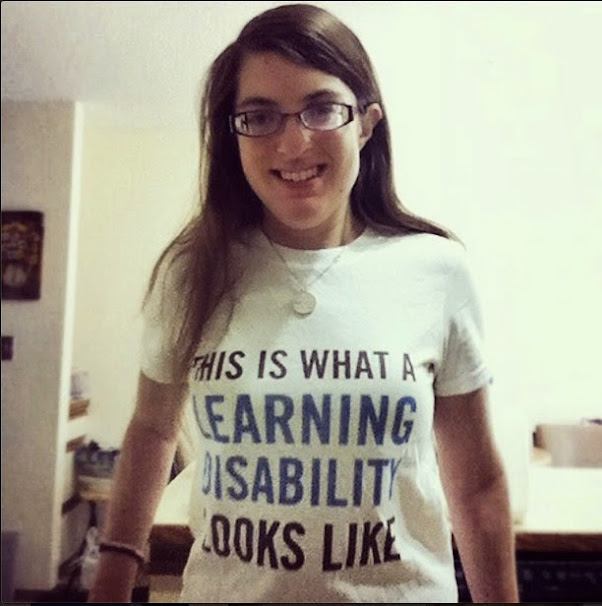
Yesterday’s post covered the basics of my world with ADHD and a learning disability. As I wrote about briefly, a big theme in the ADHD/LD sphere is that of executive functioning. I know, I know, it conjures up images of fancy businesspeople, specifically at a cocktail function. (No? Just me?)

So, what is executive functioning? Why does it matter? I’ll let the experts—and a sixth-grader named Josh—handle that in infographic form, made by the awesome folks at the National Centre for Learning Disabilities:

[View infographic here since the link broke]

(Source)

Nope, I’m not a sixth grader, but I struggle with most of these areas.

Organization: I was the person who never had a pencil or pen in school (fortunately, my friends—especially my friend Sam—were excellent with dealing with this annoying trait of mine…). Even in university, I usually had to get lucky on this one! I miss buses because I can’t find my keys, or I miscalculate how long it will take me to get ready before getting to the bus. A later pane has Josh unable to remember the correct place settings when setting the table at dinner—at twenty-three, my mom is still telling me to switch the position of the forks and knives more often than not! In a later frame yet, Josh forgets to put his finished homework in his backpack—yup, just because it’s important, doesn’t mean it’s making it where it needs to go: been there.

Working Memory: This is why it’s important for me to write everything down somehow. Whether it’s the post-it notes of chores, or making notes of what I’m reading… say it with me: “If it stays in your head, it gets lost.” (…Thanks for that mantra, Jay!). Sometimes, let’s be honest here—most of the time, I just simply didn’t do a lot of readings in university. Others, I would spend a ton of time doing the reading, and it wasn’t much different than when I actually did it. “I don’t know… I wasn’t thinking of those words when I read last night. I’m so overwhelmed.” is how I felt—and, hoping the instructor didn’t call me out for an answer: yes, I raised my hand when you asked who did the reading, no I didn’t lie—I did it, but, I can’t get the information you want in cohesive thoughts quickly enough to not look dumb or like I didn’t do the reading. “His heart sinks thinking about all the steps answering this question takes.

Self-Monitoring/Impulse Control: In the big picture, I appear okay with impulse control. Sometimes I catch myself talking way too much and apologize. But let’s go back to prior to the infographic when I noted that I took a 30 minute deviation looking for t-shirts. That’s because I impulsively read an e-mail instead of selectively ignoring it until I was done this task, and then allowed it to take priority over writing. Now, once again—how much is me, how much is ADHD? How much is that I desired to do that versus this, and how much of that was pure choice vs. choice with a side of impulsivity driven by ADHD? For instance, if I want to change my behaviour on a bigger scale (make it habit, perhaps), will it take me more sustained effort to change that behaviour versus someone with a “typical” balance of neurotransmitters (aka, a non-ADHDer!); how much of the success of this desire to change is derived of ADHD, and how much, more simply, of pure personality? Am I less likely to, for instance, adhere to an exercise routine because of my ADHD, or purely because of personality, than someone without ADHD? I don’t have answers for that, but for more on self-regulation theory and its applications, check out this article.

Cognitive Flexibility(/Working Memory): Here’s a parallel: Josh in the infographic struggles with keeping his thoughts organized in a soccer game… and kicks the ball into the wrong goal. This is 100% me. Interestingly, I coach now, and keeping the rules to the game straight is still very difficult for me—as is quickly revamping a plan without having somebody to talk it through with. This also translates into simply making/keeping plans and obligations. The combo of cognitive flexibility and working memory are probably also the difference between finishing a project early (be it a paper, volunteer research, or editing a video) because I remember it at other times and not simply the days before a due date! (I could be interpreting this wrong, but, that’s my take on it.)

Emotional Control: Little things -> big reaction? Sometimes. I still struggle to express anger or frustration in any other way than bursting into tears—or being on the verge of doing so. And, when so many basic things can be the source of my frustration, this is just another thing that is very difficult to deal with sometimes, because sometimes the small reminders feel like personal attacks—even if they aren’t at all, it’s just that when I forget my keys for the thousandth time or don’t have bus fare, I’m already frustrated enough at myself—so any outside digs are simply more than I need in a given moment.

Task Initiation: Going hand-in-hand with organization, switching from one task to another or prioritizing, can be extremely difficult. Why am I writing a blog post instead when I have a task I was supposed to have submitted yesterday is incomplete? Why did I not do any preparation for coaching Goalball on Sunday until the night before? Because it is difficult for me to initiate tasks that require a lot of mental organization or “figuring out” beforehand—even if they are things I really want to do. Because “I don’t even know where to start.” is 100% accurate. Which, of course, goes along with the next point…

Planning + Setting Priorities: I remember one occasion specifically where I started writing the bulk of my final paper for Sport in the Ancient World two days before it was due. I went to bed at 6:45 AM. I’d done the research, or at least a lot of it, but the writing of the paper itself went on the back-burner. I’m legitimately surprised that I had as few all-nighters as I did in university. Not being able to figure out the structure of a paper isn’t a mystery to me either—a combination of poor planning and task initiation lead me to having no idea how to write a midterm paper for Sport Ethics a couple years ago—I couldn’t figure out how to structure it, and it was due the next day. Had I planned better, I’d have been able to get help from the prof; instead, I dropped the course—a common thread in my university experience, and probably much to do with difficulty in terms of cognitive flexibility and planning/prioritization!  Refer also to task initiation.

Those are just a few ways executive functioning issues affect my life. As a young adult who is supposed to be gaining more and more responsibility, this is why my ADHD/LD diagnosis is key: in understanding myself and how I interact with my world, I am able to be more patient and self-accepting when I do mess up. It will happen, so best to prepare for it—and accept it!—through understanding the impacts of my quirky brain on my interaction with the world.

…The problem, of course, is that I think I’ve been too self-accepting: as I alluded to yesterday, my room is still a disaster :].

I wake up as After the Fire by Andrew McMahon fades in on my iPhone on the edge of my bed. Like most, I assume, I tap the back of my phone and the music fades out—the SleepCycle version of snooze. A short time later, the process repeats but instead of tapping snooze, I sit up, unplug my phone, and start getting ready for the day. I take my morning dose of Concerta—occasionally, however, checking the water glass beside the sink to indicate whether or not that it was indeed this morning that I took the Concerta! Sometimes the mundane tasks blend into one another, and it’s the little tricks that help me figure out what I’ve done when.

I step over something or another, and attempt to find clothes within my room. Yes, I’ll admit, it’s a disaster in here. There are a pile of books, papers and textbooks beside my bookshelf, many residual from April when i finished exams, or yes, dare I say it, February when I was working on a project for the Asthma Society of Canada and was reconsulting many of my books from school. Yet, I graduated university in June, and those piles remain. So do the ones of clothes on the floor, a byproduct of my normal cluttered life, and the fact that I spent every weekend for nearly six months packing up a bag and heading out of the city. Others of the books on the floor are notebooks, journals, and yes, my kickass yet not-utilized Moleskine Lego planner. Lesson learned: not even the kickass Lego planner can take the place of Google Calendar in my heart—or brain. I find some clothes to throw on—well, eventually; sometimes that doesn’t happen until 2:30. I graduated university in June, and resigned from my job at the beginning of October, so at present I’m hunting for jobs, doing some quantified-self-ing, and trying to make productive use of my time. Writing, video editing, coaching… A myriad of tasks and habits I’m trying to build or un-break stack up in HabitRPG.

Routine, especially building it, is probably one of those things that’s harder to work at with ADHD. It’s hard for everybody, but because I am so dependent on reminders (such as Google Calendar/iCal), it is difficult when these reminders become too repetitive and, thus, no longer intrusive enough—like I said, problem for everybody, but potentially disastrous for me in terms of meeting obligations and being accountable—another thing I try to stay conscious of. I have excellent intentions of organization: sometimes I am able to stick to them, especially with the right technology. Others, the act of organizing the organization is simply too much to organize—or, I get distracted in some subset of organization and then never accomplish the initial task! (This, is what happened in my bedroom, really. I went in to start cleaning and organizing. I decided I needed a file cabinet to keep all the paper in. I needed, then, to acquire the file cabinet. Oh, file cabinets are expensive, what about some plastic drawers? Oh, those all sort of don’t meet my needs. Hey, guess what? This was May—it’s October now. All that paper is still on the floor right where it was! (I still don’t have a file cabinet or any such organizational implement—but yes… I am trying.)

Right now, the first thing I do (and last thing I do, and maybe 85% of what I do in between…) is sit down at my laptop. Usually, my mom has affixed some sort of post-it note to it with a task or two or seven for me to accomplish. Today is “wash + dry dishes + sweep floor”. (But I swept the floor yesterday with no prompting!) Usually, with these notes, the job will get done (even though, to my dismay, the dishwasher is still not working—usually the notes say “empty dishwasher and reload”—dishwashers are probably an independent ADHDer’s best friend, except I live with my parents), because as I tell her and as my friend Jay said, “Write it down; if it stays in your head it gets lost.” That’s why not very much stays in my head very long—it gets lost super quickly in there. I struggle significantly with memory related tasks: my visual memory sucks, and my auditory memory isn’t a ton better—so, I work on the deficits of both of these by combining them to get stuff down. That’s why lists are so important… well, if I don’t lose them or can figure out how to implement them!

Back to the Concerta for a minute, the Concerta does help in that regard—it keeps me focused a lot longer on a task, and things tend to get lost in my brain less easily (things getting lost in my brain include the result of what happens when my attention wanders from a task, and I move onto another one without finishing the first one. Like starting a blog post, and then finding myself an hour later trying to work on a website… with only two and a half sentences in the blog post window. Actually, case in point on the Concerta right now? I’ve been writing this for 28 minutes now and the only thing I’ve glanced at is my phone once to reply to a text message, and the post it note of chores—which are already done. It helps, like it does for most ADHDers, that I want to be writing this right now—but even that without the Concerta, was a big issue! Medication isn’t for everybody, but to me, I’m pretty sure it was the difference between graduating university and possibly dropping out. So yes, I am distracted by bright coloured things, but so long as those bright coloured things are like my post-it note of things needing to be done, well, that’s okay. The Post-It notes are necessary because, yes, if you just tell me something to do, it’ll be forgotten. If I have that visual cue that can keep reappearing, then I’m much more likely to actually follow-through with the task.

I contemplate writing things multiple times a day. Sometimes it happens and I open up the Evernote notebook of a project I’m working on, or throw a post onto Quantify This. Sometimes though, it doesn’t. I’ll intend to go write a post on the other blog, but then spend five hours trying to install a Windows VM onto my Mac, or learn how to download all my Fitbit data into a Google spreadsheet, and then get that spreadsheet to autopopulate into Excel. Except by then it’s midnight and nope, no blog post. This is why I’m not a good daily blogger! ADHD, I think, lends itself more to this infinite curiosity, except like other infinitely curious people, ADHDers tend to have faulty brakes—we either stop too frequently, or we get into something and can’t stop. The latter, known as hyperfocus, is kind of a compensatory mechanism: we bounce around so quickly, that sometimes if we get really engaged in something or have pressure to complete a task [ie. a deadline tomorrow] we simply power through and may barely look up from a task for hours—so, right now, I’m probably a tad hyperfocused on this post because the pressure that October is ADHD and LD awareness month and it’s the 21st of October and I forgot until two days ago is enough pressure for me to get this one cranked out—that, and enough people on Facebook expressed interest in my sharing of this article last night, that I figure sharing more of my story was important to do right now. (Run-on-sentence.)

The ADHD brain is kind of like a run-on sentence in itself—I’ve said before, “I don’t stop, only pause”—there are only commas in here, no periods. I may not be physically moving, but my brain is going full speed until I eventually go to bed—something that I also have to prompt myself to do: yes, eventually I feel tired, but I rarely feel it until I make the conscious decision to go to bed—sometimes annoying, and the reason that 11 PM prompts a (now frequently ignored) reminder to “wind down” on my iPhone.  [Okay, stream of consciousness: There we go. I remembered to follow up on an e-mail prior to sitting down to start this, and that reply to the e-mail lead to searching for t-shirts… Yes, can’t make this stuff up! So, there was a 30+ minute gap in there… Typical.] The ignoring of the reminder at present, however, might be because I no longer have engagements requiring being awake at 6:45 AM.  

Which begs the question:

So how much of this is me, and how much is ADHD/LD?

Well, I’m not sure I can really separate myself from them—how my brain functions is as much me as my personality or my affinity for Cheetos. It’s just the way I am, and I’m okay with that.

I’ve written about my LD here before, because it’s kind of nonspecific. A lot of it has to do with my visual memory: I can’t read an analog clock (at least, I can’t without using my fingers to help me determine what span of time the minute hand is pointing to, which is essentially equal to being unable to read a clock), I struggle with reading comprehension when attacking large works, because it’s hugely dependent on visual and visual working memory, areas in which I am deficient, despite my reading ability being above average. I may best fall into the category of Nonverbal Learning Disability, but have not been diagnosed as such—not that it makes a huge difference. At this point, my LD comes up in ways that could be associated with my ADHD, and ways that don’t presently affect me in the day-to-day now that I’m not in school—or, ways that are much a part of me and I don’t notice as much more than quirks.

ADHD and learning disabilities come in many flavours. I have primarily inattentive ADHD—making things like sustained focus (especially for the uninteresting), organization/remembering where I put stuff, initiating/changing tasks, and coming through on commitments more challenging for me. These things are because of the effects of neurotransmitters affected in ADHD on executive functioning… but, that’s a topic for tomorrow. [It’s already written, but, it makes more sense to split into two posts at this length! :)]

Questions about learning disabilities or ADHD? Leave them below!

In August/September, I ventured from Winnipeg to Minneapolis to San Francisco, to the East Bay, to Santa Cruz and Davis, California . . . to simply start the journey that lead me to the campus of Stanford University. I already wrote about the people—so, here are more of the good things. . . and a chance to meet the people and hear their voices and stories, and how technology and social media, engaged patients and engaged providers are changing the realities of medicine, and more importantly, improving patient care outcomes.

Disclosure: Stanford University, Stanford Medicine and Stanford Anesthesia, as well as their partners (including the Kadry Foundation, Eli Lilly, and Boeringher Ingelheim) covered part of my costs to attend Stanford Medicine-X, including part of my airfare, one night of hotel, and a significant portion of my conference fees. As a recipient of an ePatient Scholarship in the Engagement/Producer track, I was required to produce a blog post, video, etc. to share the stories of Medicine X—but, let’s face it, I would have done so anyways :].