
I have the tendency to often say “____. That’s my favourite thing!” In reality, I have a lot of favourite things. Whereas many people enjoy the exploration and destination parts of travel, I enjoy the travel part of travel just as much. Airplanes. That’s my favourite thing! Airports. That’s my favourite thing! And . . . Helping to empower people with asthma. That’s my favourite thing! This weekend, many of my favourite things combined into an experience unlike any I have had the privilege and honour to be a part of, and helping to be a part of something that will hopefully grow bigger than we had ever dreamed, all with the hopes of creating a healthier country. Saturday kicked off the World Congress of Asthma, where the Asthma Society of Canada [ASC] chose to host the five-year meeting of the National Asthma Patient Alliance [NAPA] Executive Committee. I have been a part of this group for a little under a year, and being a part of the amazing things going on at the ASC has been amazing.
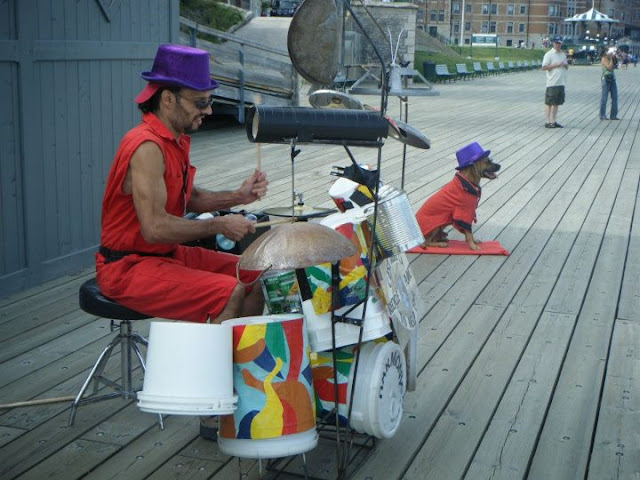
Early Saturday morning, my [amazing] aunt drove me to the airport at 4:30 AM to catch a flight to Toronto. From Toronto, we made the shorter jaunt to Quebec City, and began the immersion into the unique culture of Quebec City. I have never been to Europe, but the Old City of Quebec had an amazing vibe to it, and is what I imagine certain places in Europe might be like [I’ll make that conclusion once I get to Europe]. Following checking into the hotel, my travel companion and fellow NAPA exec member, Cathy, and I grabbed lunch on a patio, where a man playing the accordion stood across the corridor from us (and, while not very French, I ate some of the best pizza I have ever had).

We wandered the Old City for awhile. Cathy is an avid traveller, and a teacher, so she was an excellent tour guide for my first venture into the province of Quebec. We climbed I-am-not-kidding twenty-six-or-something flights of stairs (there was some audible dyspnea going on. Two prairie-dwellers with asthma trekking up the hills and stairs in Quebec is definitely a sight to see, and we made more than a few jokes at our own expense!)


(The Frontenac)


A couple and their wedding photographers. I think we were in the background of a bunch of their pictures.
And . . . the reason I am here:

We returned to the hotel late-afternoon to retrieve our bags from the desk and move into our rooms. I had been telling people to come to Quebec with me, and in reality . . .

. . . they could have! [The funny thing about this, is while I was super impressed to have a more asthma-friendly uncarpeted room, and that they are available, I actually woke up because of my asthma that night. Ultimate in irony being at an asthma conference and representing for the Asthma Society, right?]
We took some time to get ready after our epic stair-climbing/hill-trekking/Quebec exploring, and then headed to the World Congress on Asthma.


We spent some time in the exhibit area, which was my favourite part about my time at the Congress. It was very cool to be able to talk with some of the people who are on the teams creating products and medications that keep me healthy.
It’s funny, I kept super-enthusiastically walking up to these booths. One of them, NIOX, featured devices to measure FeNO [fractional exhaled nitric oxide, which is an indicator of airway inflammation] and I walked up, listened to her for about 30 seconds and said “Can you test my FeNO?”. I’m kind of excited about these sorts of things if you can’t tell [Mine was 8, which is fantastic, and means the inhaled steroids I’m taking are rocking at doing their job! Maybe I’m cured?]. The drawback to FeNO, is that the tests are expensive, and this is likely why I have never had a FeNO test done. The meter, which is exhaled into slowly for about ten seconds [complete with a visual prompt to blow a hot air balloon across a canyon without moving it outside the set of lines on a computer screen attached to the device, is $3000, and each testing mouthpiece is $15. However, they are attempting to get home FeNO testing accessible with this, or a similar, device, much as peak flow testing is currently used as a self-monitoring system. I suppose though, that before getting home FeNO accessible, there needs to be an increased focus on making FeNO testing accessible in clinic. But really, how can you not love that happy little cloud in the FeNO machine?
After getting our FeNO tested, I scored a Canadian Network for Respiratory Care stainless steel water bottle from an unmanned booth (I wanted to talk to the CNRC people!), we headed out of the exhibit area to meet with the rest of the the group who was travelling on behalf of the Asthma Society of Canada. At this point, I was able to shake the hands and see the faces belonging to the names and voices on the couple of conference calls I’ve been able to make it to.

(Photo contributed by Noah at the Asthma Society of Canada)
In addition to meeting the other Executive Committee members, I also met some of the ASC staff for the first time, Rob Oliphant (ASC CEO), Noah and Darren. My highlight here was finally meeting Rob, who was my first contact at the ASC when he was working there as the NAPA coordinator, he was also the one who recruited me to the Executive at the end of last August. I also was stoked to meet Bill Swan (I believe I had a few twitter conversations with him in the past), our co-chair for the executive, and works in health economics. We also occasionally finished one another’s sentences at dinner. After introductions, we headed into the opening lecture by Sharon Straus on Knowledge Translation.
Following the lectures, we returned to the exhibit hall for the reception where we all seem to have missed the food (for the drinking crowd, though, we still made the open bar. Like I said to Rob and a couple others, “I’m boring. Don’t drink, don’t smoke, don’t do drugs, don’t eat meat . . .”, which lead to Rob and I having a discussion about the overconsumption of meat products in the average North American lifestyle. Verdict: I’m probably healthier this way (and obviously so on the smoking and drugs bit ;)).

I then had the coolest experience. I walked up to the Trudell Medical table to say hi and see what their current pitch was, if there was anything new in the product lineup, etc. Trudell is awesome, and a couple weeks ago they sent me a huge box of accessories for inhalers and AeroChambers that I can give to kids in the groups I speak to after I sent them an e-mail about how I strongly believe that they need to work on marketing to adolescents and young adults, because we are the population that are missing the boat on increasing our aerosol medication delivery by not using an AeroChamber [Fact: spacing devices can make the medication 110% more effective because of increased deposition within the lungs and not, for example, at the back of the throat.] Part of my e-mail included some blog links and a goofy request for a purple AeroChamber (they have pink, but not purple). So, the first thing I said was “I have the pink one!” and mentioned that Trudell had just sent me a box of accessory stuff, and both people at the table simultaneously said “You’re the purple AeroChamber girl!” I just kind of blinked and burst out laughing and told them I was. I felt freaking asthma-world famous!
After this, however, the woman got to the subject of “How Old Is Your AeroChamber?” Answer: too old. Realistically, I thought buying a new AeroChamber every year was kind of a scam by the spacer-making companies. In Canada, the AeroChamber with mouthpiece costs $35 a pop. For a plastic tube with a valve. It turns out, even if you wash it weekly like you are supposed to (truth: I don’t know the last time I washed my AeroChamber. Gross.) She magically extracted me another pink AeroChamber from under the table. I chatted with them awhile longer, and then asked if I could have a new blue one, too, which she also magically extracted from under the table for me. As depicted to the right, the pink AeroChamber is marketed towards kids–obviously this did not stop me from buying my previous pink one. Like I’ve said before, if I have to live with an incurable disease, I might as well make it a little bit more fun where I can. My chat with the Trudell people saved me/Pharmacare $70. Thanks Trudell! (I’m still waiting to hear back from them if they’d like me to partner with them on increasing marketing and thus product use and thus increased medication delivery in adolescents and young adults as proposed alongside my purple AeroChamber request in my e-mail to them! :])
Okay, so after the Trudell people knew who I was, I saw the Air Quality Health Index people, talked to the folks at Alvesco who didn’t yet have any samples, and got a maple sugar candy from a booth across the exhibit hall. That is the absolute sweetest thing I had ever eaten. I definitely have a sweet tooth, but I had to contemplate between toughing out the sweetness or going to gracefully find a garbage (option 1 won, and I spent the next five mintues standing with the group by the Merck table trying to look sane while this candy probably singlehandedly destroyed my teeth. The candy was good for about the first minute, but then I just couldn’t take it anymore!).
We left the reception and paraded down the street to the diner where I had investigated the menu previously and practiced how to order vegetarian ravioli en Francais. It turned out we walked in and they asked if we wanted French or English menus, and proceeded to speak to us in English (unless we could speak French, which Erika did!) And then it turned out I got fondue [which was not bread to be dipped in cheese as anticipated, but actually like a square mozzarella stick with three types of cheese in it. Still excellent, however. I chased the cheese and salad [which they threw in unexpectedly] with what Le Conchon Dingue boasted was The Best Sugar Pie in Town. I am unsure as I have had no other sugar pie in Quebec City, but it was awesome. We had some great conversation around the table, however, Jason (who works with my mom) e-mailed me all the French I would need to know in 30 hours, except I couldn’t access it till I got home since the hotel WiFi chose to quit on me and I didn’t feel like dealing with it. I really could have used the information on how to ask for a fork a little bit earlier (which he legit included, this thing is awesome), since Rob dropped his and Bill didn’t get one for dessert! :] Instead, they just had to ask in English.

Sunday morning, I got up bright and early at five-something and packed up my stuff, tried to find the meeting room, and checked my stuff at the desk and checked out of the hotel. I wandered across the street and up the hill to the Hilton to meet Dr. Sally Wenzel at 7 AM. Sally is a researcher with the Severe Asthma Research Program in Pittsburgh, and is one of the most renowned and respected pulmonologists in the world. We took to the streets and wandered until we found an open coffee shop/bakery, and had a great talk for over an hour. This was definitely the coolest experience of the trip [well, that and the Trudell people knowing who I was]. Sally has not only a ridiculous knowledge of the inner workings of asthma but also a deep understanding of the social/emotional aspects of this disease and how it not only affects our lungs (and the rest of our bodies), but sometimes the rest of our lives, too. Her understanding of this disease from all perspectives is amazing considering she doesn’t have asthma and doesn’t know what it feels like. However, despite the fact that she is so, so full of knowledge and working so hard to make things better for people with asthma, she also is so down-to-earth and sweet that even though I was sitting there talking with an extremely well known and respected research doctor, I totally just felt like I was out with one of my friends (except, my conversation with Sally was about asthma and smart things ;)). After we finished coffee, I had to head back to the hotel for the day’s meetings and she had to head to the Congress . . . but not before we tried to get some random people in the Old City to get a picture of us!
Sally: Pardon? Pardon?
Girl in group: Um, we don’t speak French?
Me: Oh, neither do we.
Coffee with Sally was an awesome experience, and I am so, so honoured to have been able to meet with her while we were both in Quebec and to see her energy and passion for helping those of us who have asthma in person!
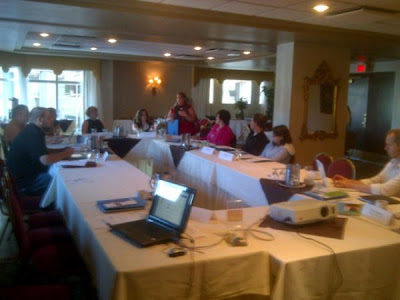
When I arrived back at the hotel, everybody was gathered in the conference room waiting for breakfast. I skipped the eggs, gave the bacon to Darren from the ASC after his bacon-enthusiast-esque comments, and had some potatoes and toast [yay starches?] and fruit. After we ate, we set to work discussing the first five years of the existence of the National Asthma Patient Alliance, then where we’re headed, how to engage more people in the asthma community, and ultimately, how to encourage Canadians with asthma to live active, healthy lives. A lot of the meeting was full of brainstorming, and as new programs and initiatives unveil, I will definitely begin sharing those thoughts. Right now it is really just a big jumble of thoughts and questions that need to be hashed out–but a LOT of really good ideas on both raising the profile of the ASC and NAPA to the people who need us, as well as engaging people with the ASC. The Team Asthma.ca shirt Sally is holding in the above picture is an initiative to encourage people with asthma to become more physically active, and a lot of our discussion revolved around expanding the program beyond running and beyond those who are already physically active. This in itself is one of my passions, but to determine an intervention of that sort is definitely a time-consuming process. By no means is it impossible, but, like any other large-scale outreach project, requires funding and time. I’d also like to shout to Rob who began the Team Asthma program while he was working at the ASC, because it is definitely my favourite NAPA program.
We were also joined by Antje Fink-Wagner from the Global Asthma and Allergy Patient Platform and learned about the work GAAPP does, including some very cool sport programs that partner developing and developed countries, help them grow healthier through sport, AND educate on asthma.
At this point in the picture, I had gotten cold so you can’t see my nice clothes as they are hiding under the hoodie. I can’t remember what we were talking about here. Photo credit goes to Noah from the ASC, and I totally stole it off their Twitter.
For a quick rundown, our sessions were as follows: NAPA at 5 – where were we going, and where did we get? Education and Advocacy – what are we doing well and what could we change? Increaseing Engagement – growing the National Asthma Patient Alliance through memberships to NAPA, Team Asthma.ca and Asthma Ambassadors, and how to make these programs more accessible, as well as advocate-friendly delivery methods/materials. Moving Forward – plans for the next 5 years.

(Rob and I. Note the kickass black tape. It is fairly evident the ASC is doing good things with money and not using a lot of it to keep signs attached to walls :])
Even though I am on this committee, it was amazing to hear all of the ideas people had used for advocating within pre-existing programs, like Ambassadors. Honestly, I was a part of the Ambassador pilot, but I had never thought of setting up a NAPA booth at different appropriate venues, like health fairs for example [truth: I didn’t know health fairs actually existed]. And what opened my eyes is that if I as a member of the executive am not thinking of these things at a higher level of involvement with the ASC, it is doubtful that an Ambassadors volunteer is thinking of them when they (like every other volunteer) have this thing called life. We discussed how advocacy opportunities have to be designed to allow the volunteer to have as much or little involvement as they can incorporate into their life, and how to go about this.

(Photo contributed by Noah at the Asthma Society of Canada)
The NAPA meeting brought up a ton of stories, thoughts, and advocacy ideas. It was awesome to be a part of that thought process, and see all of the Good Things that will be conjured up over the next five years. It is an amazing thing to be a part of this group, being representatives for the three million Canadians who live with asthma, and the family, friends and employers of these individuals who are affected by asthma.
After wrapping up the meeting, Cathy, Debbie and I went and wandered the Old City again for a bit.


I bought a t-shirt [the only thing I bought in Quebec!] and ate some mango sorbet seeing as EVERYBODY was wandering the streets with gelato. I was not disappointed! :]

My time in Quebec was whirlwind. Within an hour of buying this gelato, I’d consumed it, returned to the hotel, grabbed a taxi, and was at the airport.

In Jean Lesage Airport, we ran into Keith from the executive committee (who is a respiratory therapy student! I <3 RTs!), whose plane to Montreal had been delayed. We switched our flight to the one he was on since we were ready to go (they run about a thousand flights between Quebec City and Montreal every day, so consequently, they are not full).

Upon arrival in Montreal, we tried to switch our next flight with no luck. Win some/lose some. We instead wandered around trying to find legit food but settled for Tim Horton’s (so Canadian of us!). Cathy and I were finally split up for seats for our last flight. Being awake since 5 AM, I tried to sleep with no luck (my inflatable pillow was in my backpack that my plane neighbour had nicely stowed in the overhead bin for me. Read: I am short and I couldn’t get to it even if I tried). However, the looking-asleep with my earphones in meant the flight attendant didn’t offer me any more flight beverages, which was good as I was trying to avoid any more airplane apple juice. Three glasses in two days is quite enough, thanks AirCanada. I essentially pretended to sleep/watched the flight map on TV all the way home. Who needs a movie when you can see the flight map?
I met so many amazing people and had a ton of awesome experiences while in Quebec. I came home feeling so full of good things and the desire to do so much more to engage people with asthma to keep reaching out to one another. To think that I was only there for 33 hours blows my mind, because I feel like I packed about a week’s worth of experiences into the 45 hours I was out of my hometown. Quebec was a place that i really didn’t have a ton of desire to visit before I went, but now that I have been, I definitely want to go back with more time to explore and feel the vibe of the city. I had an amazing time, and feel both blessed and honoured to be a part of this amazing group of people who are doing serious good things.
Disclosure: Through sponsorship from Merck, the Asthma Society of Canada covered all of my expenses for the World Congress on Asthma and National Asthma Patient Alliance meetings in Quebec City, including ground transportation, meals, conference registration, accommodation and airfare. I am a member of the ASC’s NAPA Executive Committee, but am under no obligation to blog about my involvement with the ASC.
If you would like to help the Asthma Society of Canada be able to deliver the programs we began to formulate this weekend, as well as current and future ventures, please consider making a donation.


 Since my asthma entered a level of weirdness beyond control by the standard FloVent/Ventolin combination, I’ve worn some sort of medical identification (they started off with random ICE tags I got made at the pet store with the engraving machine, if you want me to be perfectly honest, and then i got a plain silver dog tag made at an American Wal-Mart). I wear ID not with the anticipation anything will happen rendering me unable to speak, but in case it does. I’m as active as possible, and all over the place–whether I’m out on the road, at work or school, outdoors training for a race, indoors working out or hanging with my friends, not everybody around me is going to know my medical history. And while I don’t go to great lengths to “hide” my asthma, it happens often enough that people don’t know (that part gets kind of awkward when I’m playing goofy gym games in school and have some sort of coughing spasm/respiratory situation. Ahem). In reality though, you just never know what will happen, and being proactive is NEVER a bad idea.


